
Countries with high rates of violence against women are taking welcome steps, backed by money and deadlines. South Africa has moved R3.8bn (about US$232m) to hire 3,552 social workers. India's human rights commission has given ministries two months to act on women's safety.
Content note: this article discusses violence against women, including killings of women. Support services are listed at the end.
South Africa's finance minister, Enoch Godongwana, has reprioritised R3.8bn (about US$232m) over three years to hire 3,552 social workers. EWN reports that this is the largest part of a R5.1bn (US$311m) response drawn from existing budgets. Sexual offences courts will grow from 55 to 101 by 2028/29. Thuthuzela Care Centres, which support rape survivors, will rise from 72 to 80.
On 27 October, India's National Human Rights Commission (NHRC) issued an advisory on women's safety. It covers work and public spaces. It went to ten Union ministries, the Railway Board and every state and union territory. Each is asked to send an action-taken report within two months.
The South African and Indian governments both attached sums, numbers or deadlines to their plans. Brazil, Cambodia and Timor-Leste have also set out national pacts, plans or monitoring in the past year. Whether these steps reduce violence against women will depend on delivery, and that evidence is still to come.
Why WHO says progress has stalled
WHO estimates that 840 million women, nearly one in three, have experienced partner or sexual violence in their lifetime. In the past year, 316 million women aged 15 or older experienced physical or sexual violence from a partner. That is 11% of women in that age group. WHO puts the decline in partner violence at only 0.2% a year over two decades.
Southern Asia has a past-year partner violence rate of 19%, according to the same WHO report. The figure is 17% in sub-Saharan Africa and 5% in Europe and Northern America. In 2022, only 0.2% of global development aid went to programmes preventing violence against women. WHO says this funding fell further in 2025.
Violence against women is one of WHO's ten top issues for women's health. WHO links it to injuries, depression, unintended pregnancy and sexually transmitted infections, including HIV. In 2023, on average 140 women and girls were killed every day by a partner or other family member.
What South Africa is funding
South Africa's femicide rate was 10.6 per 100,000 women in 2020/21, according to the South African Medical Research Council. Intimate partners committed 60.1% of those killings, about three women a day. The council puts the country's intimate partner femicide rate at about five times the global rate.
England and Wales had 155 female homicide victims in the year to March 2025, ONS figures show. That is a rate of 5.0 per million population, or 0.5 per 100,000. The US rate was 2.3 per 100,000 in 2024, according to the Bureau of Justice Statistics.
Europe has the lowest regional rate of women killed by partners or family members, at 0.5 per 100,000 in 2024. Africa has the highest, at 3 per 100,000, according to UNODC and UN Women. These figures cover different years and definitions, so they give only a rough comparison.
In 2025, the National Disaster Management Centre declared gender-based violence and femicide a national disaster. It used section 23 of the Disaster Management Act.
At least 11 women were found killed in Ekurhuleni, east of Johannesburg, between mid-July and late September. President Cyril Ramaphosa addressed the nation on 29 September. "What we have done has not been enough. We need to do much more," he said.
Ramaphosa ordered local authorities to complete a women's safety audit within 60 days. The audit will identify high-risk places such as broken streetlights, abandoned buildings and poorly secured parks. Police and prosecutors must also review unresolved murder, rape and other gender-based violence cases within 90 days.
Godongwana's budget statement also adds R186m (US$11m) for forensic and investigative capacity, according to SAnews. A further R157.4m (US$9.6m) goes to national coordination and oversight.
What India's advisory asks for
India recorded 441,534 crimes against women in 2024, according to National Crime Records Bureau data. That was 1.4% fewer than in 2023. Cruelty by a husband or his relatives was the largest category, at 27.2% of cases. The rate was 64.6 crimes per 100,000 women.
In August 2024, a 31-year-old trainee doctor was raped and murdered at the Kolkata medical college where she worked. Her killing set off protests across India, according to Reuters. Hundreds of thousands of women marched through the night in cities across the country, and doctors protested nationwide. Reuters drew parallels with the 2012 gang rape and murder of a student on a Delhi bus.
The NHRC advisory covers eight areas, including bystander intervention, survivor support, the role of the police and cybercrime. It calls for working CCTV cameras and alarm buttons in buses and trains, according to United News of India. It also asks for set police response times and mandatory gender-sensitisation training for police.
The commission wants gender audits for large new infrastructure projects, and legislation that encourages bystanders to intervene. Its advisory cites women's labour force participation of 34.6% in September 2026. A second NHRC advisory, on 28 October, covers healthcare and other rights for women in prison and their children.
Where else governments are setting targets
Brazil recorded at least 1,518 femicides in 2025, a record, according to justice ministry figures released in February. On 4 February 2026, the federal government, Congress and the judiciary launched the National Pact: Brazil Against Femicide. It calls for coordinated, permanent action by all three branches to prevent violence against women and girls. Samira Bueno, executive director of the Brazilian Forum on Public Safety, said that "the budget is not there".
Cambodia and Timor-Leste are using a UN Women and Equality Institute framework to measure prevention nationally. Timor-Leste cut its original list of more than 50 indicators to six priorities. Cambodia used the framework to shape its new national action plan. WHO reports that Cambodia is also updating its domestic violence law and refurbishing shelters.
The UK has set aside £15m (about US$20m) over three years for its first misogyny prevention fund. New South Wales in Australia has made secretly tracking a partner a crime.
What the evidence says works
WHO's RESPECT Women framework sets out seven prevention strategies. They run from relationship skills and women's empowerment to poverty reduction, enabling environments and changing gender norms. WHO also calls for survivor-centred health, legal and social services, better data and costed national action plans. Ecuador, Liberia, Trinidad and Tobago and Uganda have developed such plans, according to WHO.
South Africa's package leans towards services and justice: social workers, courts and care centres. India's advisory focuses on public spaces, policing and bystanders. Neither announcement, as published, sets a target for reducing violence itself. Cambodia and Timor-Leste are building the kind of monitoring that could track one.
What women can do now
The NO MORE Global Directory lists trusted domestic and sexual violence services, including helplines and shelters. It covers more than 200 countries. NO MORE developed it with the United Nations and the World Bank Group. The directory is reviewed and updated every three months.
South Africa's GBV Command Centre runs 24 hours a day on 0800 428 428. Women can also dial *120*7867# from any mobile phone. India's Women Helpline, 181, gives round-the-clock emergency response and refers women to police, One Stop Centres and hospitals.
WHO identifies sexual and reproductive health services as an important entry point for survivors. It says health services should offer comprehensive care, particularly sexual and reproductive health and mental health care. Anyone who has experienced violence can ask a doctor, nurse or midwife for treatment and further support.
South Africa's safety audit is due by late November, 60 days after the President's address. India's action-taken reports are due by late December.
If this article has affected you, the NO MORE Global Directory lists support services near you.
This content is for information only and does not replace advice from a qualified health professional.
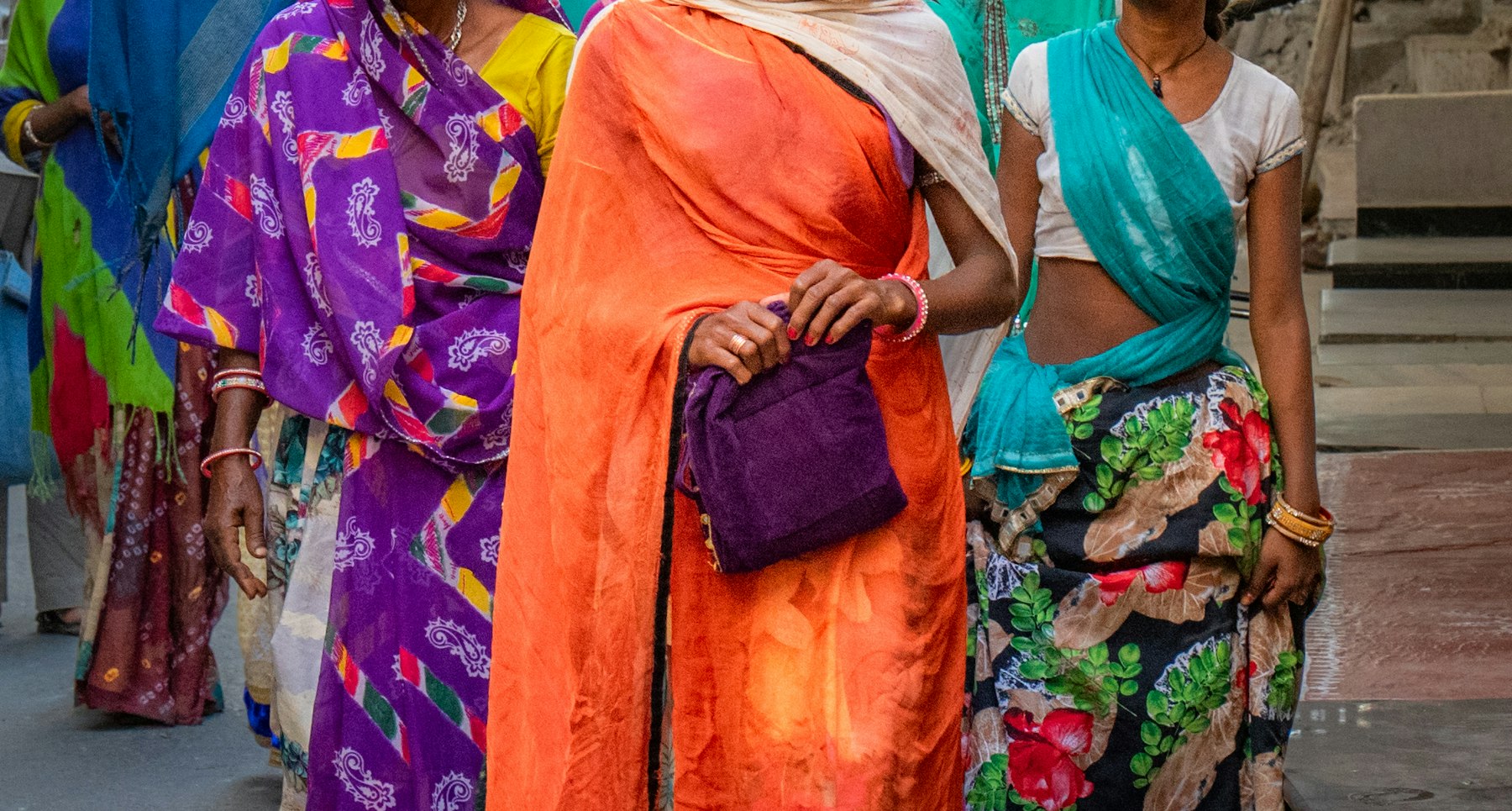
Header image: Lewis J Goetz on Unsplash, Unsplash License.