
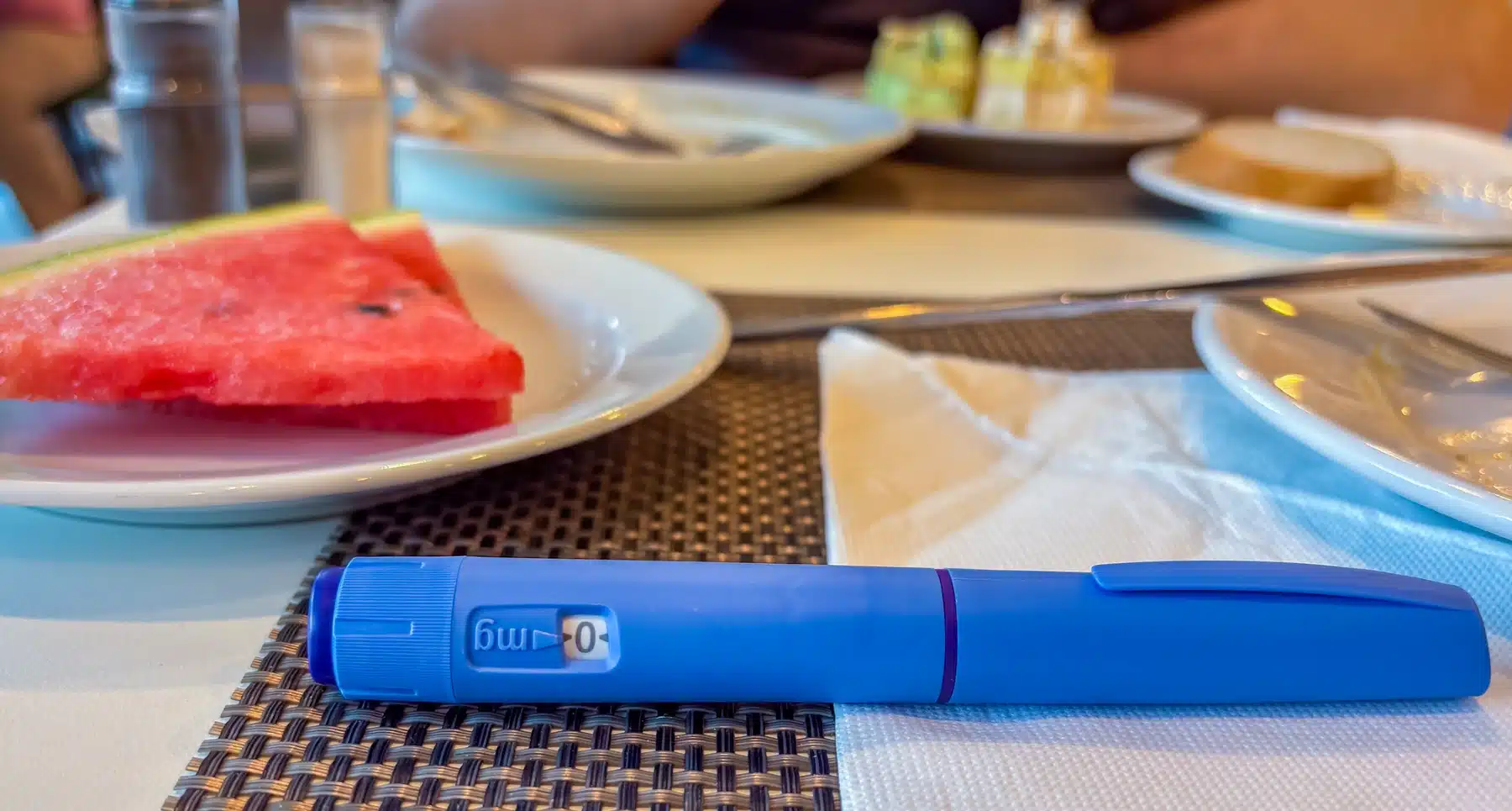
GLP-1 medicines have reached 8.5% of households in Great Britain. Women still make up most users, but men are catching up fast as pills replace injections.
At least one person takes a GLP-1 weight-loss medicine in 8.5% of households in Great Britain. That matches the share of homes with vegetarians and pescatarians combined. The figures come from the consumer research company Worldpanel by Numerator.
The comparisons go further. A similar share of households buys Corona beer (8.4%) or Kellogg's Rice Krispies (8.6%). Worldpanel's latest household survey, covering 9,629 homes, suggests about 2.6 million adults were using the medicines in August 2026. Figures here come from Worldpanel's release as reported by Food Manufacture and the Guardian.
"GLP-1 users are now found in as many British homes as some of Great Britain's best-known food and drink brands, and growth is accelerating," said Nishita Pattni, senior consultant at Worldpanel by Numerator. "In just six months, between February and August 2026, user numbers rose almost as much as they did in the whole of the previous year."
How many women are using GLP-1 medicines?
Worldpanel found men made up 32% of users in August, up from 23% in February. Male users nearly doubled, from 440,000 to 830,000.
That leaves women at roughly 68% of users. On WHW's calculation from Worldpanel's figures, about 1.77 million women were taking the medicines in August. In February, when Worldpanel counted 1.9 million users and put women at 77%, the figure was about 1.46 million.
Other UK research shows the same pattern. In February 2026, the Health Foundation published an analysis of 113,630 private patients. Almost eight in 10 private prescriptions were for women. Uptake peaked between ages 30 and 49.
A January 2026 UCL population study in BMC Medicine found use in early 2025 twice as common among women as men. Survey estimates differ by method, though. PwC's June 2026 survey put women at 60% of current users.
Why is uptake rising so quickly?
Worldpanel links much of the growth to pills. The MHRA approved oral versions for weight loss in June, and pills now account for 11.2% of users, Worldpanel found.
"For many people, a daily pill is far easier than an injection," Pattni said.
What could 2027 look like?
Chantel Kennaugh, Worldpanel's head of public sector and nutrition, expects users in more than 10% of British homes in 2027. She called the trend "a seismic change that requires retailers and manufacturers to re-think their strategies."
PwC's forecast is higher. It estimates pills could lift adult users from about 3 million to about 7 million, or 13% of UK adults. Neither forecast gives a split between women and men.
Households are already changing what they buy. Worldpanel estimates GLP-1 households spent £1bn less on groceries in their first year of treatment. Alcohol and crisp spending fell 15% more than in other homes.
How does Britain compare with other countries?
Worldpanel uses the same household measure elsewhere. It found GLP-1 users in about 9% of Saudi households and 6% of Spanish households. That places Britain level with Saudi Arabia and ahead of Spain.
The United States remains furthest ahead. A KFF poll from November 2025 found one in eight US adults currently taking a GLP-1 drug. Women were more likely than men to be using them, at 15% against 9%.
Australia shows a similar gender gap. NSW Health's 2025 population survey found 9.2% of women and 6.5% of men in New South Wales reported use. Nationally, an EY survey of 9,202 adults found one in 10 currently using the medicines.
Who is missing out?
Most British users pay privately, and cost shapes who gets treatment. The Health Foundation found people in England's most deprived areas were about a third less likely to get private prescriptions. Yet obesity in those areas is twice as common as in the least deprived.
NHS access remains narrow. NHS England's phased rollout of tirzepatide in primary care aims to reach about 220,000 people over three years. That compares with 2.6 million adults using the medicines now.
What can women do?
Women considering these medicines should start with their GP or another prescriber. NHS eligibility in England follows NICE criteria, and a clinician can explain the benefits, risks and side effects.
The MHRA's July 2026 safety advice urged people to "check the pharmacy is registered with the General Pharmaceutical Council." Prescription-only medicines should never come from social media sellers or beauty salons. Suspected side effects can be reported through the MHRA's Yellow Card scheme.
Women already taking the medicines should keep up follow-up appointments and raise new symptoms with a health professional.
What needs to change?
The gap between private demand and NHS supply needs closing. That means faster NHS rollout to the women with the greatest clinical need, wherever they live.
Better data would help too. The UK has no national count of private GLP-1 prescriptions, so surveys from consumer researchers are filling the gap. Worldpanel expects one in 10 homes to have a user next year. Unless health services start counting private use directly, that gap will keep growing.
This content is for information only and does not replace advice from a qualified health professional.
Header image: Photo by National Cancer Institute on Unsplash