
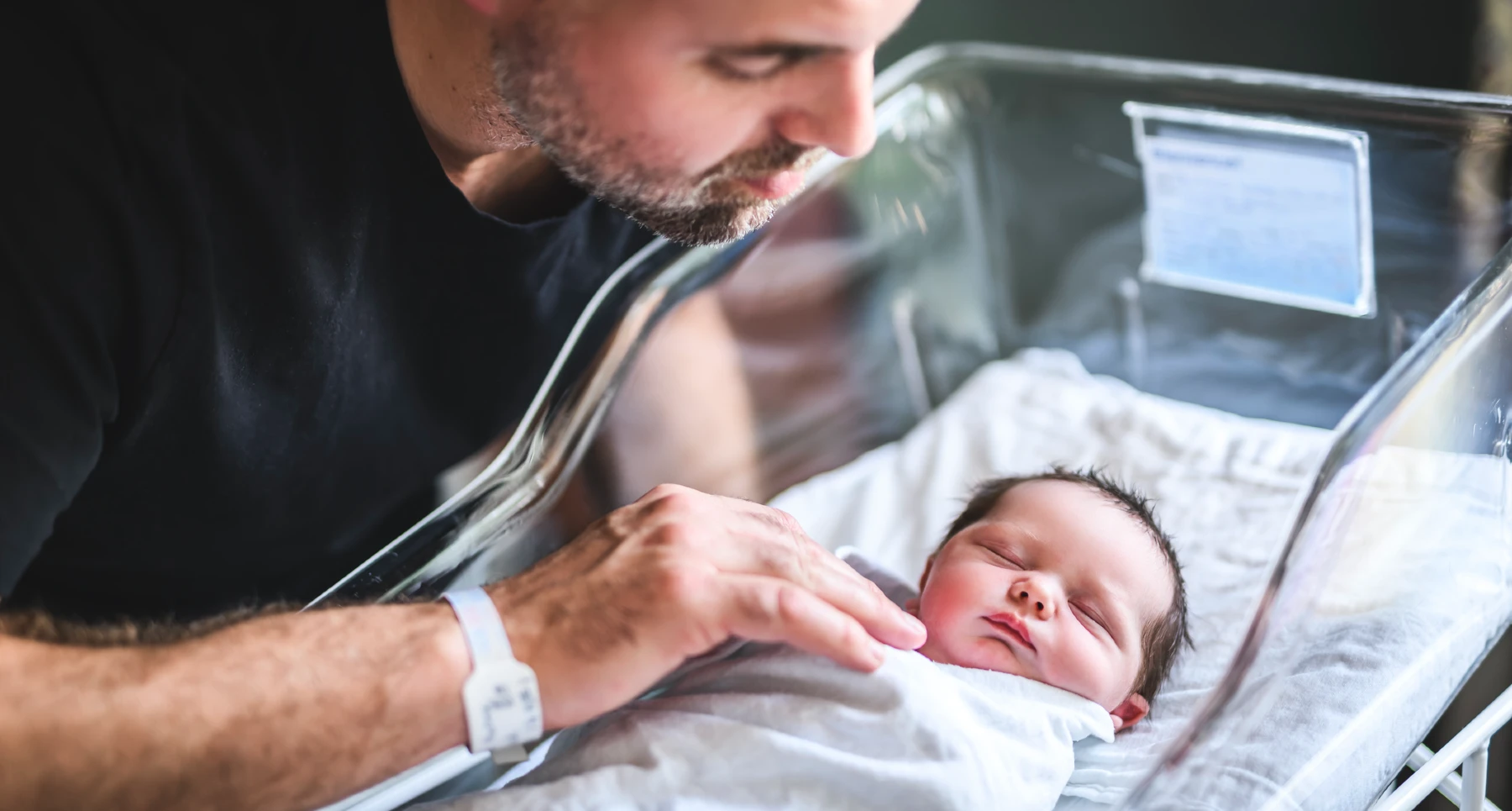
A UN Women and World Bank brief finds 66 of 190 economies give fathers no paid leave at all. Spain, Finland, Iceland and Sweden show what happens when fathers get a share of their own.
Mothers are entitled to an average of 196 days of paid leave after a birth, and fathers to 25. The figures come from a new policy brief by UN Women and the World Bank Group. It reviewed leave laws in 190 economies.
In 66 of those economies, fathers have no guaranteed paid leave. Of the 124 that offer it, half give fathers less than two weeks. Mothers fare better on paper, yet 61 economies fall short of the International Labour Organization's standard of 14 weeks. Six guarantee mothers no paid leave at all.
The brief, published on 22 October, links short leave for fathers to the care load women carry for years afterwards. Women already spend 2.5 times as many hours a day on unpaid care work as men, it says. Around one in four parents also cares for an older relative.
"Care sustains our families, societies, and economies, yet women continue to shoulder a disproportionate share of it," said Nyaradzayi Gumbonzvanda, UN Women's Deputy Executive Director, in the release accompanying the brief.
Where fathers now get an equal share of paid leave
Spain has given fathers 16 weeks of leave since 2021, matching mothers. The weeks can't be transferred, and the first six are compulsory. Fathers have "reacted by taking almost all of the available weeks", according to researchers writing for the EsadeEcPol think tank. The same analysis found that 12 of the 16 weeks, on average, are taken while the mother is also at home.
Finland rewrote its system in 2022. Each parent now gets 160 working days of parental allowance, Finland's official country portal says. Parents can pass 63 of those days to each other.
Fathers of children born after the reform took an average of 78 days, according to Kela, the national social insurance institution. That compares with 41 days in 2020, Yle reported. Men's share of all parental leave days rose from about 10% to just under 20%.
Iceland gives each parent six months, with six weeks transferable between them. Leave is paid at 80% of average earnings up to a monthly cap, according to Iceland's government guidance.
Spain, Finland and Iceland are all high-income European countries. The brief does not publish a list of the economies with equal entitlements. In Japan, more than half of new fathers now take childcare leave, Women's Health World reported this month.
What fathers' leave does for mothers' health
Sweden's 2012 reform produced some of the clearest evidence on health. It let fathers take up to 30 days of paid leave, in separate blocks, while the mother was also on leave.
Stanford economists Petra Persson and Maya Rossin-Slater tracked what followed. Mothers were 14% less likely to need specialist or hospital care for birth complications within six months, Stanford Medicine reported. They were 11% less likely to be prescribed antibiotics. Anti-anxiety prescriptions fell by 26%, with the largest drop in the first three months.
Fathers used only a few days of the new entitlement on average. The researchers concluded that the father's ability to be at home when needed was what changed outcomes. Their peer-reviewed paper appeared in the American Economic Journal: Applied Economics in October 2024. It covers one country with an already generous system, so the size of the effect may differ elsewhere.
The UN brief also cites analysis linking more involved fathering to better cognitive function, language, emotion regulation and behaviour in children.
What leave does for women's pay
Paternity leave is linked to higher earnings and employment for mothers, according to the brief. A study of Québec's 2006 reform found a more limited effect. The IZA Institute of Labor Economics published it in January 2025.
Québec reserved five weeks of paid leave for fathers. Fathers' take-up rose from roughly 20% to 60%. Three to ten years later, the researchers found no significant change in mothers' earnings or in the gender earnings gap. They found no shift in other markers of caregiving norms either.
UN Women and the World Bank make a wider case for this reason. Leave reserved for fathers works best inside a full care system, with childcare services and social protection, the brief argues.
What families, employers and governments can do
Gumbonzvanda said closing the parenthood gap "requires equitable parental and carers' leave". The brief calls on governments to recognise men and boys as caregivers in law and policy.
For families, the Swedish findings suggest a father's presence counts most in the weeks right after birth. Parents can check what their national scheme reserves for each parent, and whether days can be taken in blocks. Employers can make it normal for men to take their full entitlement.
The brief came out ahead of the International Day of Care and Support on 29 October. UN agencies are using the day to call for care systems that treat men as carers too.