A study of more than a million pregnancies in Canada links gaining weight above recommended ranges with more serious complications. Guidance from the UK, France, the US, Japan and Australia shows what helps and where women can find support.
More than half of the pregnancies in a new Ontario study involved weight gain above recommended ranges. Researchers at McMaster University analysed 1,035,927 pregnancies between 2012 and 2022. They found 52.8% gained more than the US Institute of Medicine's 2009 ranges advise, and 18.6% gained less. The study was published in JAMA Network Open on 22 October 2026.
Severe maternal morbidity describes serious complications around birth. Its rate was 16.09 per 1,000 births when weight gain was above the range, against 12.18 when it was within it. After adjustment, the risk was 16% to 33% higher, depending on a woman's body mass index (BMI) before pregnancy. Gaining too little was also linked to more complications among women in the normal and overweight BMI groups.
The Ontario study is observational, so it shows an association and cannot prove that weight gain caused the complications. Women with a chronic condition before pregnancy had more than twice the rate of complications, even when their gain stayed in range. Laura Anderson is the study's senior author at McMaster. In comments released with the study, she said "supporting healthy weight gain will require more than individual counselling."
How much weight gain is expected?
The US Centers for Disease Control and Prevention (CDC) publishes ranges based on the Institute of Medicine guidance. It lists 25 to 35 lb, about 11 to 16 kg, for women who start pregnancy at a healthy weight. Its ranges are higher for women who are underweight and lower for those living with overweight or obesity.
The NHS in England says most pregnant women gain between 10 and 12.5 kg, mostly after week 20. In France, Santé publique France's 1000 premiers jours programme gives an average total gain of 13 kg.
Japan shows why too little gain is also a concern. In 2021 the Japan Society of Obstetrics and Gynecology raised its range for women of healthy weight to 10 to 13 kg. Its 1999 guidance had set 7 to 10 kg. The society's perinatal committee judged the older range to fall below the normal gain of pregnancy, with possible long-term harm to babies.
Do pregnant women need to eat for two?
The NHS says: "You do not need to 'eat for 2'", even with twins or triplets. In England, the National Institute for Health and Care Excellence (NICE) asks clinicians to give the same reassurance. NICE also advises against trying to lose weight during pregnancy, because of possible effects on the baby.
Santé publique France offers practical steps. It suggests more fruit, vegetables and pulses, and fewer sugary drinks, fatty foods and ultra-processed products. It favours whole fruit over juice and advises against weight-loss diets in pregnancy.
How much activity is safe?
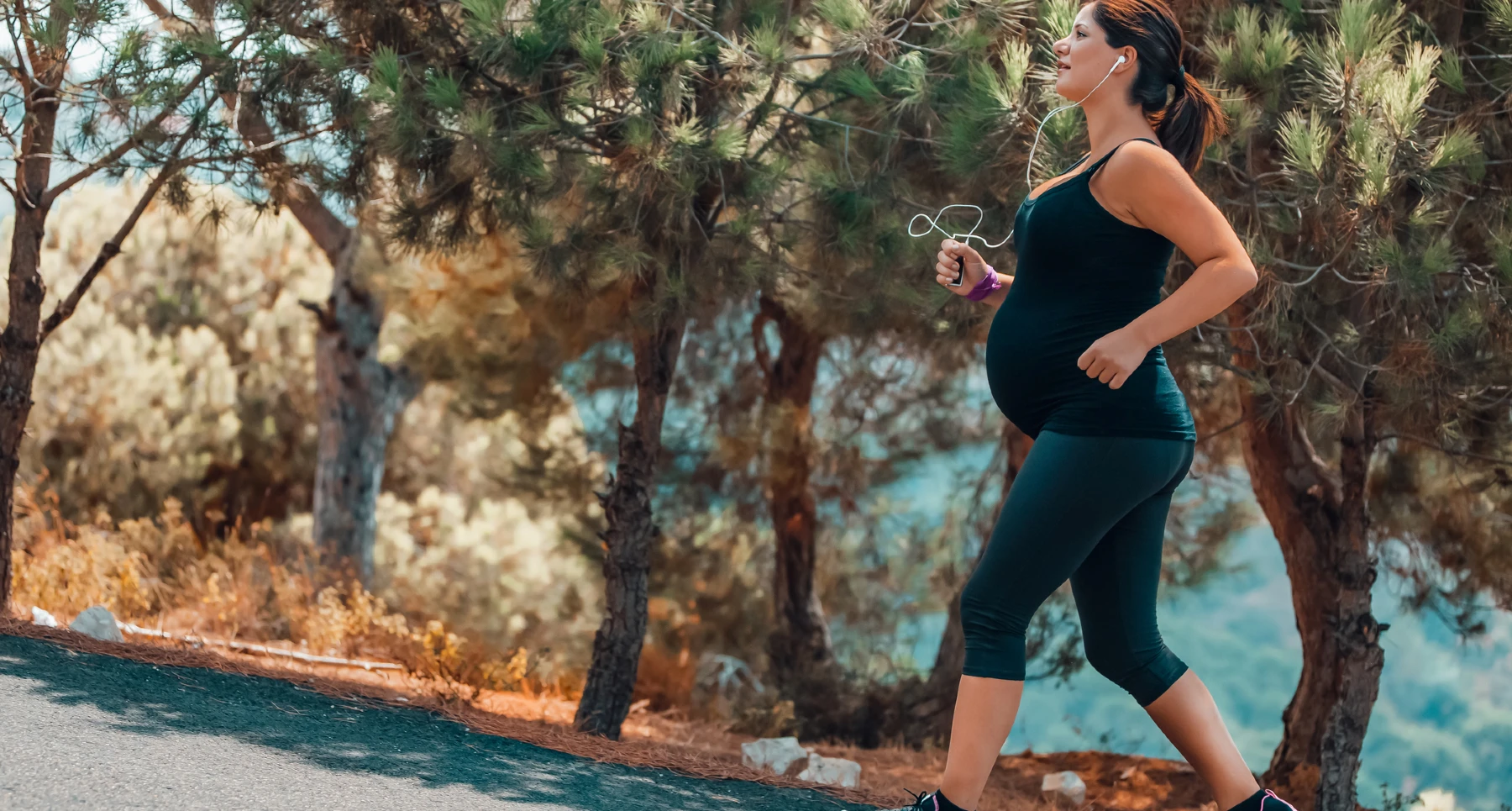
The CDC recommends at least 150 minutes of moderate aerobic activity a week, such as 30 minutes on five days. Brisk walking, water aerobics and some forms of yoga all count. Women who ran before pregnancy can usually carry on. The CDC also notes that "some physical activity is better than none." After the first trimester, it advises avoiding activities that require lying flat on the back.
NICE asks clinicians to discuss activity with every pregnant woman. Its advice covers continuing safely, building up gradually from a low base and spending less time sitting. WHO recommends counselling on healthy eating and keeping active as part of antenatal care. Its aim is to help women stay healthy and avoid excessive weight gain.
Do diet and activity programmes make a difference?
A 2021 review in JAMA Internal Medicine pooled 117 randomised trials involving 34,546 women. Structured diet and activity programmes cut weight gain by 1.15 kg on average, compared with routine care. Diet-based programmes cut it by 2.63 kg. The odds of gestational diabetes were 21% lower across all programmes.
Many of the trials carried a high risk of bias, which limits certainty. Helena Teede of Monash University in Melbourne led the review. She and her co-authors wrote that the analysis "strongly supports the integration of structured diet and physical activity interventions alongside routine antenatal care."
Should women weigh themselves?
NICE, which sets guidance for England, advises measuring weight and BMI at the first antenatal appointment. After that, it advises weighing only for a clinical reason. Women who want to track their weight can ask for the estimated healthy total gain for their starting BMI. NICE also asks clinicians to share weight figures in the way a woman prefers, or not at all.
Santé publique France says weighing once or twice a month is enough in most cases. Women who think they have gained too much can ask their doctor or midwife for tailored dietary advice.
Where can women find support?
The NHS advises women with concerns about their weight to ask their midwife or GP. It notes that they may give extra advice when BMI is above 30 or below 18.5. Given the Ontario findings, women living with diabetes, high blood pressure or another long-term condition may want to raise weight gain early.
New South Wales in Australia offers free coaching. The state government's Get Healthy in Pregnancy service gives up to 10 phone or online sessions with a health coach. Gaining a healthy amount of weight is one of its goals, and women can refer themselves.
This content is for information only and does not replace advice from a qualified health professional.