A Gallup-Pivotal survey finds that 44% of UK women say their health has stopped them doing everything they want. Many understand menopause symptoms far better than the treatments, and more learn about menopause from friends than from doctors.
Health has stopped 44% of UK women from doing everything they want in the past five years. That is the headline finding of the Gallup-Pivotal U.K. Women's Health Survey. Nearly half (46%) say their health has left them less able to pursue activities that interest them.
A third (34%) say their health has kept them from living up to their potential at work. Some 29% have cut their hours or shifts.
Gallup published the results on 8 October 2026. Researchers Stephanie Marken and Andy Kemp surveyed 2,004 UK adults online from 30 July to 10 August 2026. Respondents came from an opt-in online panel, with women oversampled and results weighted to census targets. The margin of error for women is plus or minus 3.4 percentage points, and all results are self-reported.
Health problems reach into home life
Some 38% of women say their health has made it harder to care for themselves. A similar share (36%) have missed events with family or friends because of it. Those figures sit alongside the work findings, so the cost falls on households as well as employers.
Women know the symptoms better than the treatments
Around 42% of UK women say they understand menopause symptoms well, yet only 22% say the same of treatments. A third (33%) know little or nothing about treatments at all.
Friends (62%) and family (61%) are the most common sources of menopause information. Doctors or other medical professionals come third at 53%, only three points ahead of social media at 50%. Newspapers or magazines reach 43% of women. A further 26% have used ChatGPT or other AI chatbots, rising to 44% among women aged 18 to 34.
Younger women's use of chatbots shows where many now start their search. Neither social media nor AI tools is held to clinical standards. Women must judge the quality of what they find for themselves. Medical professionals are the only source on the list who can examine, diagnose and treat.
Getting treatment often takes persistence
Among women aged 35 and over, 31% have sought treatment for menopause symptoms. Most of them (78%) say healthcare professionals proactively addressed their symptoms. Still, 35% of those seeking care say they had to push to be taken seriously or to receive treatment.
That figure rises to 44% among women aged 45 to 54. Menopause usually happens between 45 and 55, according to the NHS. This is the group most likely to need care. A quarter (25%) of women who sought care could not get the care they felt they needed despite trying.
Of UK women who have experienced menopause or perimenopause, 58% report at least one negative effect on life or work.
How the UK compares with the US
Gallup ran a companion survey of US women in July 2026. There, 25% reported a good understanding of menopause treatment options, close to the UK figure of 22%. Doctors ranked fourth as a source of information in the US, at 51%, behind social media at 54%.
UK women were twice as likely to use AI chatbots for menopause information (26% against 13%). They were also more likely to report having to push for care, at 35% against 24% in the US. The US study used the probability-based Gallup Panel, so the comparison is indicative only.
Awareness of and access to menopause information "remain a significant challenge in most countries", says the World Health Organization. Its menopause fact sheet puts women aged 50 and over at 26% of all women and girls worldwide in 2021. A decade earlier the share was 22%.
What women can ask for
NICE's menopause guideline for England (NG23), updated in November 2024, sets out the options clinicians should discuss. It covers the benefits and risks of hormone replacement therapy (HRT), as part of shared decision-making. NICE also recommends menopause-specific cognitive behavioural therapy (CBT) for hot flushes and night sweats. Women can use CBT alongside HRT, or instead of it if HRT is unsuitable or unwanted.
The NHS advises women with symptoms to discuss HRT and other options with a doctor, nurse or pharmacist. Its treatment guidance lists non-hormonal choices, including CBT and some medicines for hot flushes. There is very little evidence on how well herbal remedies work or how safe they are, the NHS warns.
Women in work have legal protections too. Equality and Human Rights Commission guidance says menopause symptoms could count as a disability under the Equality Act 2010. That applies where symptoms have a long-term and substantial effect on daily activities. Employers must then make reasonable adjustments.
What needs to happen next
The renewed Women's Health Strategy for England, published on 15 April 2026, commits to redesigning clinical pathways for menopause. It adds a question about menopause symptoms to the NHS Health Check for adults aged 40 to 74. The government says this gives up to 5 million women simpler access to guidance and support. NHS Online will also support women with menstrual and menopausal symptoms.
A third of UK women know little or nothing about treatments, so information will decide how far these steps reach. Clear, trusted advice in GP surgeries, health checks and workplaces could reach women before a chatbot does.
Workplaces carry their own duties. The EHRC updated its menopause guidance for employers on 24 June 2026. Employers must also assess workplace risks under health and safety law. Large employers in England, Scotland and Wales can now publish voluntary action plans showing how they support employees experiencing menopause.
Plans are due to become mandatory for employers with 250 or more staff from spring 2027, subject to secondary legislation.
This content is for information only and does not replace advice from a qualified health professional.
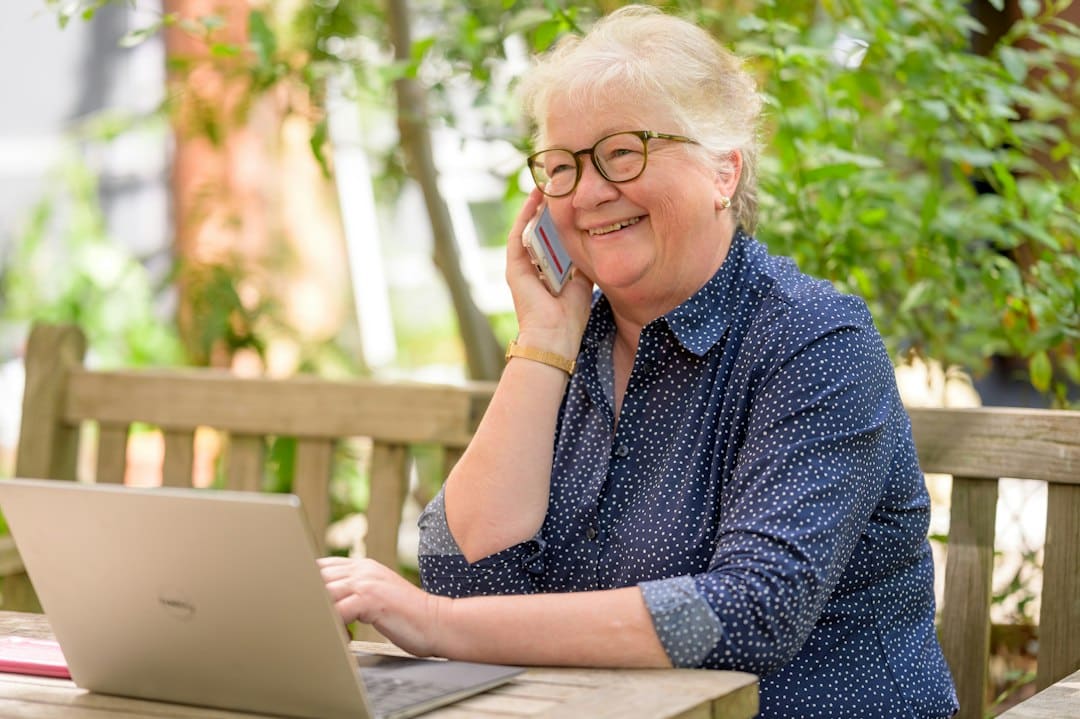
Header image: Photo by Centre for Ageing Better on Unsplash