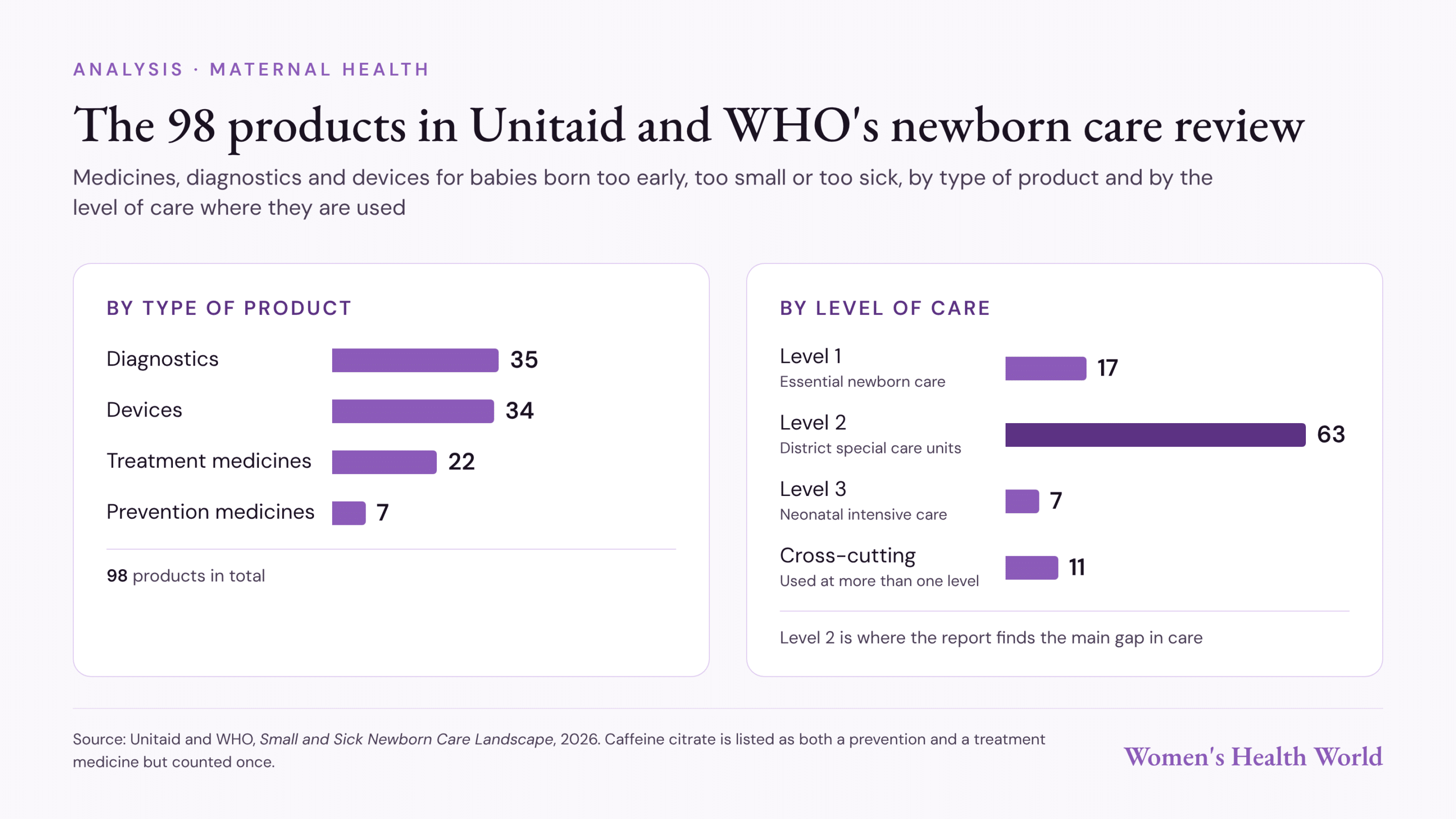
A Unitaid and WHO review of 98 medicines, diagnostics and devices finds that most effective newborn care already exists. District hospitals in low- and middle-income countries often lack the staff and working equipment to use it.
"Most high-impact interventions already exist and are recommended in global guidance," the Small and Sick Newborn Care Landscape says. The joint report also covers ways of organising care for babies born too early, too small or too sick. Its authors put the main obstacle down to access and effective use in the countries with the most deaths.
An estimated 2.3 million babies died within 28 days of birth in 2024, nearly half of all under-five deaths. Small and sick newborns account for more than half of them, Unitaid said when it published the report on 15 November. More than one in four babies born worldwide meet the criteria for at least one small or sick newborn condition, the report adds.
Sub-Saharan Africa and South Asia together account for more than 80% of newborn deaths. Around 66 countries are off track for the Sustainable Development Goal on newborn mortality.
Nine treatments face four different barriers
The report singles out nine interventions, chosen for their effect on the main causes of newborn death and their relevance to high-burden countries. It groups them by the main barrier each faces.
Bubble continuous positive airway pressure (CPAP), which helps babies breathe, LED phototherapy for jaundice and pulse oximeters often stop working. The authors list device faults, weak maintenance, missing spare parts and too few biomedical engineers. They recommend budgeting about 7% of a device's purchase cost each year for upkeep.
Surfactant helps a premature baby's lungs inflate. It needs a form or delivery method suited to low-resource hospitals, as do sepsis diagnostics and injectable antibiotics. Supply of surfactant is concentrated among few makers, which keeps prices high.
Antenatal corticosteroids and bag-valve-mask ventilation are limited by wider health-system problems. Caffeine citrate, which treats pauses in a preterm baby's breathing, is held back mainly by its price.
Most of the care is needed in district hospitals
Level 2 units, the special care wards in district hospitals, are "the critical implementation bottleneck for improving survival outcomes", the report says. They sit between a basic health centre and a specialist neonatal intensive care unit. Of the 98 products reviewed, 63 are meant for this level.
Kenya's county-level newborn units mostly fell below minimum staffing and equipment levels for reliable care. In Tanzania, facility and district budgets routinely leave out running costs and consumables. "Keeping the devices running is usually the challenge," the authors write.
India has built one of the most extensive government-run networks of district newborn units, according to the review. A stepped-wedge trial of the Safer Births Bundle of Care in Tanzania improved the quality of newborn resuscitation and of monitoring during labour.
Most extremely preterm babies in low-income countries die within days
More than 90% of extremely preterm babies born in low-income countries die within the first few days of life, WHO's preterm birth fact sheet says. In high-income settings, fewer than 10% die. Half of babies born at or before 32 weeks die in low-income settings, while almost all survive in high-income countries.
WHO estimates that 13.4 million babies were born preterm in 2020, more than one in ten. Three-quarters of deaths from preterm birth could be prevented with current, cost-effective care, it says. Its 2022 recommendations for preterm and low-birth-weight babies include kangaroo mother care straight after birth, early breastfeeding, CPAP and caffeine. Mothers and babies should stay together unless the baby is critically ill.
Madalitso Chidumu Baloyi is Malawi's Minister of Health and Sanitation. In the report's foreword, she writes that "far too many newborns continue to die from causes that we know how to prevent and treat."
Six recommendations for governments and funders
The report asks governments to build and scale working Level 2 newborn units at district level. It wants buyers to procure respiratory care as integrated packages instead of single products. Funders are asked to put access to proven interventions ahead of the discovery of new ones.
Other recommendations cover market shaping to improve affordability and secure supply. Care should be organised around "zero separation" of mothers and babies. The last recommendation calls for better coordination and accountability from product development through to use in hospitals.
Climate pressures, conflict and displacement can add to newborn risks in underserved areas, the authors warn. Unitaid and WHO scheduled a public webinar on the report for 23 November.
What pregnant women and families can do
WHO recommends at least eight antenatal contacts with a health worker, starting before 12 weeks of pregnancy. Women at risk of an early birth can ask whether antenatal corticosteroids are available. WHO recommends them in defined circumstances to protect a preterm baby's lungs. Anyone worried about signs of early labour should contact a midwife or doctor straight away.
Families can ask about kangaroo mother care, where a parent holds the baby skin to skin on their chest. WHO's World Prematurity Day campaign this year focuses on what happens after discharge. It says too many preterm babies still die in the weeks after leaving hospital. Every preterm baby should get health and developmental checks, with support for parents.
This content is for information only and does not replace advice from a qualified health professional.
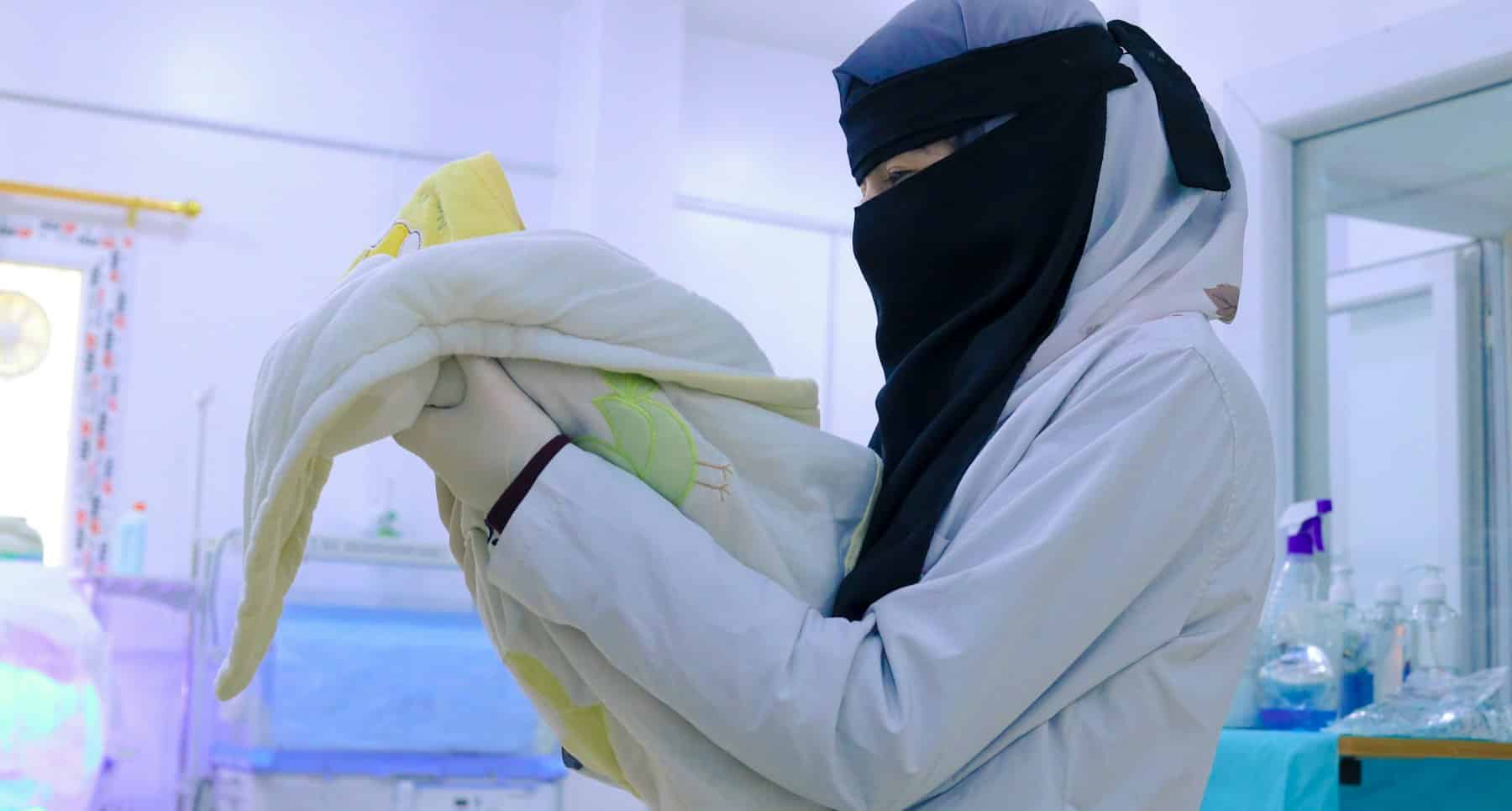
Header image: Photo by mohamad azaam on Unsplash