For every woman who dies in pregnancy or childbirth, many more survive life-threatening complications. Surveillance systems that count these near misses are helping countries such as Italy and the UK improve care, and an international network that met in Rome this month wants that work to spread.
A hospital using the World Health Organization’s near-miss approach checks each seriously ill pregnant woman against a fixed set of markers. These include signs of organ failure, certain laboratory results and emergency treatments. A woman who meets one of them and survives is counted as a maternal near miss.
WHO published the method in 2011 for health workers, programme managers and policymakers. Because every hospital applies the same markers, hospitals in different countries can count cases the same way. They can then use those counts to judge the quality of their own care, and to compare it with others.
Deaths are counted, survivors far less often
About 260,000 women died during and after pregnancy and childbirth in 2023, according to WHO. That is almost one death every two minutes. Most could have been prevented.
Researchers in Ethiopia, writing in BMC Pregnancy and Childbirth in 2018, defined a near miss as “a woman who nearly died, but survived a complication” during pregnancy, childbirth or within 42 days of the pregnancy ending. Those cases sit within a wider group, severe maternal morbidity. The US Centers for Disease Control and Prevention (CDC) defines it as serious, unexpected outcomes of pregnancy and birth. These can damage a woman’s health in the short or long term.
The CDC tracks 21 indicators in hospital records. They include events such as emergency hysterectomy, blood transfusion and organ failure. Advocates of counting these cases argue that they give health systems an earlier and more detailed warning than deaths alone.
Survivors show where care went wrong
Near misses are more common than deaths, which makes patterns easier to detect. At Jimma University Teaching Hospital in south-west Ethiopia, the 2018 study recorded 5.8 near misses for every maternal death between February and August 2015. That figure comes from a single hospital and can’t be generalised. It still shows how many more cases a facility can learn from.
Survivors can also describe what happened to them. Their records show which part of care worked, and where delays occurred.
A 2022 systematic review in BMJ Global Health pooled 60 studies using WHO criteria. It found a pooled near-miss prevalence of 1.4%. Among well-studied regions, sub-Saharan Africa had the highest figure at 2.4%, followed by Central and Southern Asia at 2.2%. Only one study came from Europe and North America, so the authors cautioned against reading a figure for that region.
Researchers in low-resource settings reported practical barriers, the review found. Some hospitals lacked intensive care units, laboratory tests or blood products, which makes some WHO criteria hard to apply. Of the 15 studies that adapted the criteria, 14 came from low-resource settings.
Italy and the UK show what counting reveals
Several high-income countries now run national obstetric surveillance systems. They collect data on rare, serious complications directly from maternity units. The UK Obstetric Surveillance System (UKOSS), at the University of Oxford, has run studies since at least 2006, starting with eclampsia. Its current work covers conditions such as amniotic fluid embolism and severe respiratory virus infection in pregnancy.
Italy’s system, ItOSS, is run by the Istituto Superiore di Sanità (ISS), the national public health institute. Its maternal mortality surveillance covers 15 regions accounting for 94.7% of births. Linking death certificates with hospital records showed that the official ratio for 2006 to 2012 was understated by 60.8%.
ItOSS also identified maternal suicide as an important cause of death. Its study of 2006 to 2012 found 67 maternal suicides in 10 regions, a ratio of 2.30 per 100,000 live births. About 60% of the women had a previous psychiatric history.
The International Network of Obstetric Survey Systems (INOSS) links these national systems. It shares study protocols and case definitions so that countries can pool data and compare results. Its current projects include an eclampsia study and a study of pregnancy-related hysterectomy across 12 INOSS countries.
Rome brings the network together
In Rome, the ISS hosted the INOSS annual meeting and an international conference from 30 September to 2 October 2026. Its public conference, on 2 October, was titled “Maternal Health between Evidence, Health Systems and Care Practices”.
The conference programme covered severe maternal morbidity, prevention strategies, organisation of care, social inequalities and perinatal mental health. Speakers came from Canada, Denmark, France, Italy, Latvia, the Netherlands, the UK and the US, with a session chair from Namibia.
Manisha Nair, of the University of Copenhagen and the University of Oxford, presented on pregnancy-related cardiometabolic disease in India. Isabelle Malhamé, of the Université de Montréal, presented a Canadian cardiovascular surveillance study.
Gaps in the countries with most deaths
WHO says around 70% of maternal deaths in 2023, about 182,000, occurred in sub-Saharan Africa. The maternal mortality ratio was 346 per 100,000 live births in low-income countries, compared with 10 in high-income countries.
Hospital-based near-miss studies in Africa and Asia have filled part of that gap, though the BMJ Global Health review shows most cover a single facility. National, population-based systems like Italy’s or the UK’s remain rare in the countries with the most deaths.
The WHO roadmap for hypertensive disorders of pregnancy, launched on 8 October 2026, lists advocacy and accountability among its five areas of action. WHO says women with these disorders face higher later-life risks of high blood pressure, heart disease, stroke and kidney disease. Death counts do not capture those long-term harms.
Warning signs to know during pregnancy and the year after
The CDC’s Hear Her campaign in the US lists urgent maternal warning signs “during pregnancy and in the year after delivery”. They include a headache that won’t go away or gets worse, dizziness or fainting, changes in vision and a fever of 38°C (100.4°F) or higher.
The list also covers trouble breathing, chest pain or a fast-beating heart, severe belly pain, and extreme swelling of the hands or face. Thoughts of self-harm or of harming the baby are on it too. The CDC advises women to seek medical care immediately if any of these signs appear. It also advises telling staff about a current pregnancy or one in the past year.
In England and Wales, NICE guidance advises pregnant women to see a healthcare professional immediately if they have symptoms of pre-eclampsia. These include severe headache, vomiting and sudden swelling of the face, hands or feet.
In England, a research programme is testing how to prevent these emergencies. Claire Carson, of the University of Oxford, presented the PRiSMM programme at the Rome conference. Funded by the UK National Institute for Health and Care Research, it is testing a bundle of care to reduce severe illness and death in pregnancy. It is also developing a new way to collect data on maternal morbidity.
If this article has raised difficult feelings, free and confidential helplines in more than 175 countries are listed at Find A Helpline.
This article is for information only and does not replace advice from a qualified health professional.
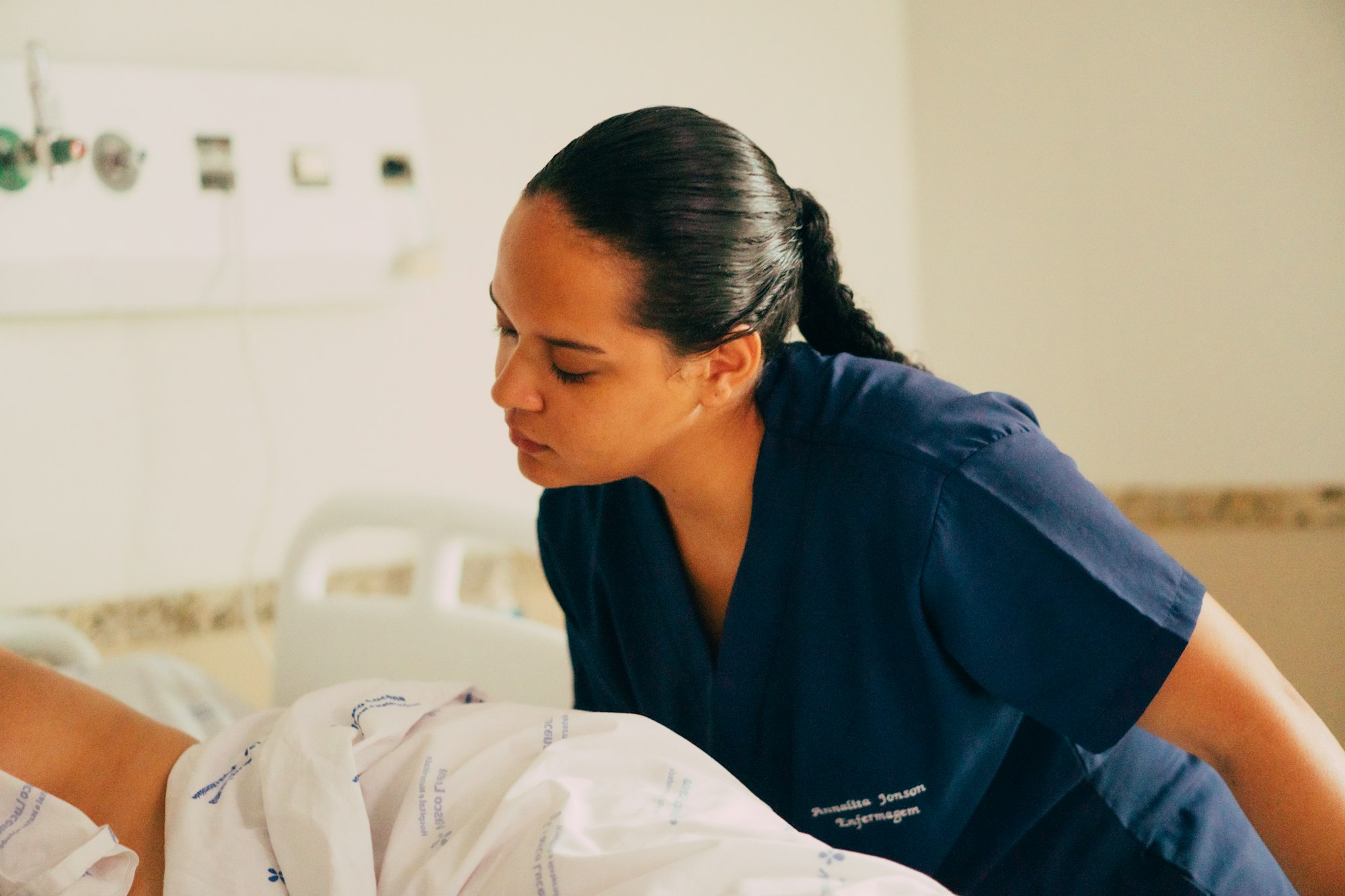
Header image: Maria Luísa Queiroz on Unsplash